In 2025, the European Digital Cinema Forum (EDCF) marks a significant milestone: its 25th anniversary. Founded at the turn of the millennium, the EDCF was established at a pivotal moment for the film and cinema industry, standing on the precipice of its most radical technological transformation since the introduction of sound. The organisation was created not merely to react to this seismic shift but to proactively guide the European cinema community through it. Today, a quarter-century later, the EDCF stands as a testament to the power of collaboration and forward-thinking leadership, having successfully navigated the industry’s digital transition while continuing to serve as a vital platform for innovation, knowledge-sharing, and advocacy on behalf of the big screen.
The Founding Vision: A United European Front in a Digital World
The industry landscape in the year 2000 was one of immense potential but also profound uncertainty. While digital technology – whether for the production, post-production or distribution of films – promised new creative possibilities and more efficient distribution, the path for its adoption was fraught with challenges. The high cost of electronic projection(1) systems was widely considered the “single largest barrier” to a large-scale rollout, and widespread penetration was viewed as a distant prospect. The European market, with its diverse territories and exhibition models as well as perception of ‘cinema’ as being as much about culture as commerce, required a unified voice to ensure a smooth and equitable transition.
It was out of this need that the EDCF was born. Established in 2000, and constituted in June 2001 as a “joint Swedish-British-French effort,” the organization’s foundational mission was to act as a “forum” for discussing key issues surrounding digital cinema in Europe. The choice of the term “Forum” was a strategic one, defining the EDCF not as a rigid governing body but as a neutral platform for open dialogue and the cultivation of a “common understanding” across European territories. This collaborative model proved instrumental in minimising the disruption to European cinemas during the transition from celluloid to digital. The EDCF’s explicit purpose was to put forward a European perspective on cinema technology within global standards organizations, ensuring that the continent’s interests were not overlooked in the face of Hollywood-led initiatives.
(1) Terminology was one of the initial ‘battles’ with the term electronic cinema or e-cinema eventually giving way to digital cinema or d-cinema
The early years of the EDCF were shaped by the visionary leadership of several key figures who brought a rare blend of technical expertise and cultural diplomacy to the organization.
- Dr. Charles Sandbank, a celebrated British electronics engineer, served as a founding co-chairman of the EDCF in 2001. Sandbank’s career was defined by pioneering work at the BBC, where he was instrumental in the development of the BBC Micro computer project, Nicam stereo sound, and digital television, and became the first Chair of the EBU’s HDTV Committee. His immense technical credibility and personal enthusiasm for new projects were vital in persuading “politicians and organisations to invest in new technologies”. Within the EDCF, his specific contribution was lobbying government-backed bodies, including the UK Film Council, to invest in electronic digital projectors for cinemas. His early enthusiasm for 3D cinema also positioned the EDCF at the forefront of exploring emerging formats and audience experiences.
- Åse Kleveland served as Chairman of the Board, lending the EDCF her distinguished reputation as a singer, politician, and cultural leader. As Norway’s Minister of Culture from 1990 to 1996 and later CEO of the Swedish Film Institute, Kleveland was perfectly positioned to lead an organisation managing the cultural and political dimensions of a major technological shift. Her background, which included studies in law with a particular emphasis on copyright and authors’ rights, was uniquely relevant to the challenges of digital content and distribution in the new era.
- Dave Monk, appointed as the EDCF’s Chief Executive Officer in 2006, brought over 38 years of experience from Texas Instruments, a company whose DLP Cinema™ technology was a key enabler of digital cinema. Monk’s leadership was aimed at expanding the EDCF’s reach, ensuring its membership was “wholly representative of the cinema business and culture” and that it would become a “valuable and important voice” in effecting change.
- John Graham, was always so much more than just the ‘Secretary’ title of his could convey. He was the organisational glue that held the four letters together and oil that kept it moving. He was instrumental in getting the LA Tours organised with local partners, he was interlocutor between different European personalities and bodies, he was the one who made sure that contracts were signed, papers were in order and bills were paid. Because he did almost everything it is hard to single out any one or two achievements but instead he was the quiet guiding force.
The establishment of the EDCF well before the widespread rollout of digital cinema was a crucial strategic choice. It allowed the organization to take on a proactive rather than reactive role, shaping the conversation and building a consensus that would ultimately allow the European market to embrace the digital transition with minimal disruption. Those lucky enough to attend the founding meeting at the Swedish Film Institute in Stockholm might remember that with prototype digital projectors from Texas Instruments only installed in a handful of cinemas across Europe at that time, the film shown for the EDCF guests was a restored version of Stanley Kubrick’s “2001 – A Space Odessey”- on film and at a time when that date was still one year away in the future!
The forum model proved particularly effective during this period of uncertainty, as it provided a neutral ground for dialogue that united competing interests under a shared goal of progress. It also established itself as a discussion partner to Hollywood-based digital cinema standard setting efforts, particularly once the Digital Cinema Initiative LLC (DCI) was established by the six main Hollywood studios. Representatives of the DCI were often invited to EDCF events, as well as regularly meeting up with DCI representatives in Los Angeles.
Guiding the Transition: Publications, Standards, and Education
The EDCF’s foundational achievement was its role in facilitating the successful digitisation of European cinemas. The organisation’s initial mission to help the industry navigate this “seismic transition process” with minimal impact should be considered a resounding success. Evidence of this success is found in the statistics, which show that by the end of 2013, approximately 87% of the EU’s total screen base of 30,000 screens had been digitized. Without wishing to indulge in counter factual history the EDCF also helped to avert a scenario in which European e-cinema standards were different from those of the DCI.
A key pillar of this success was the EDCF’s commitment to education and the creation of accessible technical and professional resources. The organization understood that the transition was not just a technical problem but a knowledge gap that needed to be bridged.
- The EDCF Guide to Digital Cinema Production: Edited by founding member Lars Svanberg of the SFI, this publication was hailed as an “excellent guide to the very complex issues surrounding digital cinema”. It provided a unique and professional view on the end-to-end process of digital filmmaking from a European perspective, addressing not only technical concerns but also the philosophical debate around “Photo-Chemical Fundamentalism” and the future of traditional film-based cinematography. The guide’s practical approach and inclusion of production case studies made it an invaluable resource for film professionals and decision-makers.
- The Best Practice Guide: To provide hands-on, practical guidance, the EDCF developed a series of Best Practice Guide modules. Authored by working groups of subject experts, these modules were designed to help cinema operators and post-production managers “navigate existing industry standards, recommended practices, and other industry de facto norms”. This resource underscores the EDCF’s commitment to providing actionable solutions to real-world industry problems.
- The EDCF Guide for Film Festivals in the Digital Age: Recognizing that the digital transition presented unique challenges for all sectors of the industry, the EDCF published a free guide specifically for film festivals. Based on feedback from festival professionals, this guide was designed to help them manage the “digital nightmares” of the new era, demonstrating the EDCF’s comprehensive approach to industry-wide support.
The EDCF’s educational efforts were a powerful and non-coercive form of advocacy. By providing a “basis of common understanding” through expert-authored, accessible publications, the organisation effectively lowered the barriers to entry for smaller exhibitors and post-production houses, thereby arguably accelerating the industry-wide adoption of digital technology. This educational mission also positioned the EDCF as a crucial advocate for European cinema on the global stage. Its work with global standards bodies such as the Society of Motion Picture and Television Engineers (SMPTE) and Digital Cinema Initiatives (DCI) ensured that the unique needs and priorities of European professionals were represented in global discussions. This function was vital in ensuring that the new digital infrastructure was not just a one-size-fits-all solution but one that was viable for the diverse cultural and technical landscape of European cinema.
Table 1: Timeline of Major EDCF Publications
Publication Title | Year of Publication | Key Focus |
The EDCF Guide to Digital Cinema Production | 2003 (approx.) | A European perspective on the end-to-end process of digital filmmaking, technical concerns, and archiving. |
The EDCF Guide for Film Festivals in the Digital Age | 2015 | A free guide to help film festival professionals with the complexities of digital technology. |
A Best Practice Guide | Ongoing | A series of modules for professionals to navigate existing industry standards and best practices. |
Live Recommendations – EDCF Whitepaper | 2023 | A publication on live cinema recommendations. |
The Annual Calendar: EDCF in Action
The EDCF’s work is made tangible through its annual calendar of signature events, which serve as crucial platforms for networking, education, and showcasing innovation. These events are consistently cited as key member benefits and have evolved to reflect the changing priorities of the industry.
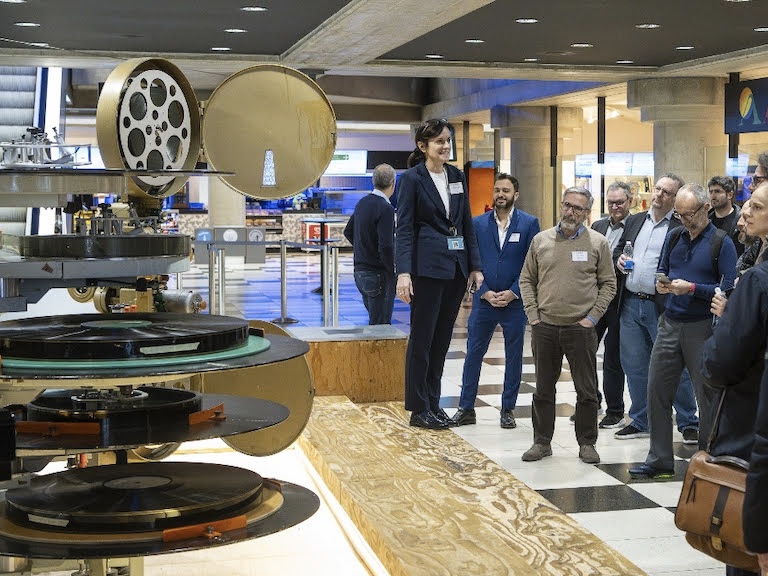
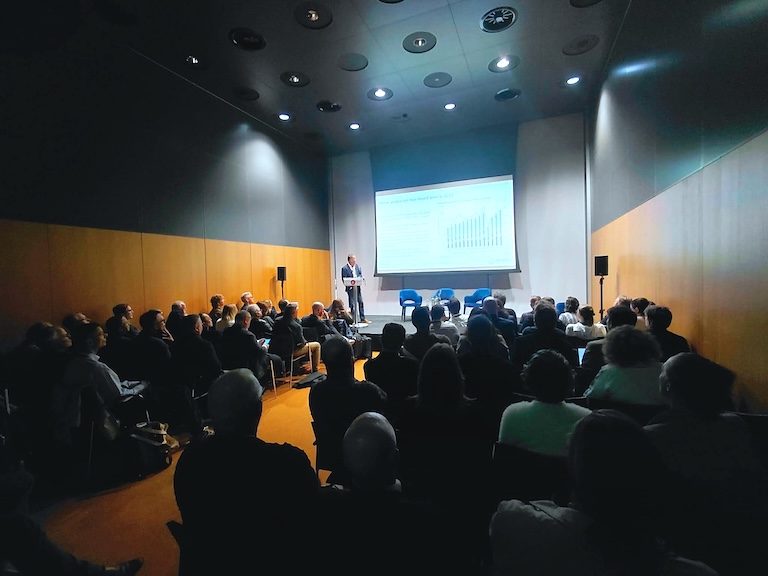
- The EDCF Annual Conference: This annual gathering brings together over 100 industry professionals for two days of seminars and site visits in a major European city. Recent conferences have demonstrated the organization’s continued relevance in a post-digitization world. The Nuremberg 2023 convention was the first in-person event since 2019, affirming the value of physical meetings. It featured a new format, including a tour of the Cinecitta multiplex, and “quickfire soapboxes” that allowed experts to present on topics like LED and laser projection. The conference also hosted a panel on the technical challenges and lessons from the release of Avatar: The Way of Water. The Milan 2025 conference, celebrating the 25th anniversary, saw “record attendance” and took place at the historic ARCADIA Cinema, focusing on “resilience and innovation” and new technologies like HDR and LED screens.
- The EDCF Los Angeles Tour: This is a unique and highly valued offering for EDCF members. The tour is a curated programme of behind-the-scenes visits to Hollywood studios and facilities held in the days immediately preceding the annual CinemaCon convention. This two-day event provides industry professionals with unprecedented access to leading studios and post-production facilities, offering insights into the latest advancements in film production and technology. It serves as a crucial bridge between the European and American cinema industries.
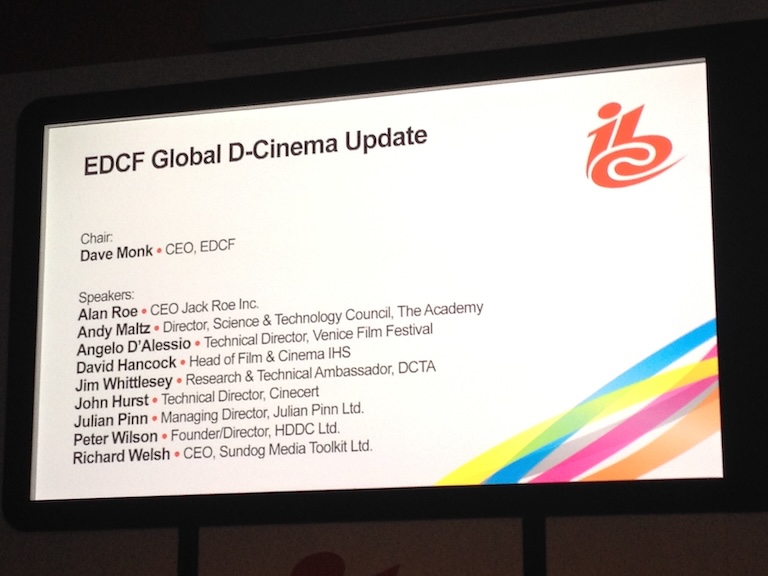
- The EDCF Global Cinema Seminar at IBC: This session at the IBC conference in Amsterdam is a long standing and much anticipated fixtures of the cinema events calender. It is the only cinema-focused session at the conference, providing an annual “Global Update” on the latest developments in digital cinema. The topics covered in these seminars vividly illustrate the evolution of the industry. It has featured screening of digital cinema film releases in the main auditorium, set up the specifications of a premium presentation. While the 2014 session focused on the vexing issue of software upgrades, the 2023 seminar had moved on to post-pandemic issues such as supply chain solutions, sustainability, HDR in cinema, AI-based subtitle generation, and cybersecurity. This shift in focus from fundamental digital rollout issues to second-generation challenges highlights the EDCF’s ability to remain at the forefront of industry trends.
- The EDCF Session at CineEurope: The EDCF also holds an exclusive high-level meeting during CineEurope in Barcelona, focusing on recent cinema technology developments and key challenges. The EDCF also participates in the UNIC Cinema Days in Brussels at the end of the year.
The evolution of the EDCF’s event calendar from focusing on the challenges of the digital rollout to addressing issues like sustainability, HDR, and AI reflects the maturity of the industry itself. The successful completion of the initial digitisation mission has allowed the industry’s intellectual and financial resources to be redirected toward a new wave of challenges. The EDCF’s continued relevance is directly tied to its ability to adapt its agenda to these new priorities.
Table 2: Key EDCF Events and Recent Highlights
Event Name | Frequency & Location | Notable Topics (2023-2025) |
Annual Conference | Annually, rotating European city | Sustainability, LED in cinemas, Avatar: The Way of Water workflow, HDR, 25th-anniversary celebration. |
Los Angeles Tour | Annually, before CinemaCon | Behind-the-scenes visits to Hollywood studios and facilities. |
Global Cinema Seminar at IBC | Annually, at IBC (Amsterdam) | Supply chain issues, sustainability, HDR in cinema, AI workflows, cybersecurity. |
Session at CineEurope | Annually, at CineEurope (Barcelona) | High-level meeting on recent cinema technology developments and challenges. |
Leadership, Partnerships, and a New Direction
With the roll-out of digital cinema in Europe largely completed in the early teens of this century, the questions arose whether there was a continued need and mandate for the EDCF to exist. This was an existential question and rather than existing for the sake of continuity itself, EDCF slowly defined a new role for itself. This was not always an easy process and there were competing views and strong personalities, pushing or even pulling the organisation in different directions. Ultimately, however, this type of root-and-branch shake up benefited the EDCF as it had a clear new mandate to continue tackling the challenges in what was now just cinema (the ‘digital’ prefix being redundant). Given that those involved were giving up their time and energy for free, from the President down, the work involved in setting the new course and following it should not be under-estimated. A special mention needs to be made here of David Hancock, who took over the Presidency having been involved since 2009. It was his drive that meant that the EDCF had an Annual Conference, as well as pushing for more member engagement and more ‘Forum’ as part of EDCF.
The EDCF’s operational model has always been defined by its deep-seated commitment to collaboration, both within its membership and with other key industry bodies. This collaborative ecosystem has been essential to its effectiveness. The International Union of Cinemas (UNIC) is a formal partner, holding a seat on the EDCF’s board and actively participating in its working groups, including the SMPTE-DCP rollout project group. This symbiotic relationship ensures that the voice and concerns of European cinema exhibitors are directly represented in the EDCF’s technical discussions.
Similarly, the EDCF collaborates with the US-based Inter-Society Digital Cinema Forum (ISDCF), with the two organizations co-hosting meetings and sessions. This international bridge-building is a core part of the EDCF’s mission to foster dialogue across continents and at numerous events, including ‘external’ events such as major film festivals and gatherings, ranging from Cannes to Munich.
The organisation’s recent leadership transitions highlight a strategic reshaping of its long-term objectives.
- David Hancock, Chief Analyst at OMDIA, has been an influential figure in the EDCF since its outset, serving as a conference moderator and speaker and as a former President. His prominent role and his public pledge to make sustainability in the film and cinema industries as well as AI his main focus for the most recent phase of his career serve as a strong indicator of the direction the industry is heading.
- Cathy Huis in ‘t Veld Esser serves as the current President, representing a new era for the organization. Her leadership, first introduced at the 2023 Nuremberg convention, has emphasised a desire for the EDCF to be a “true forum” and a “conduit for conversations”. She has also placed a strong emphasis on the importance of diversity within the industry, recognizing the need for more balance in the composition of industry bodies and meetings.
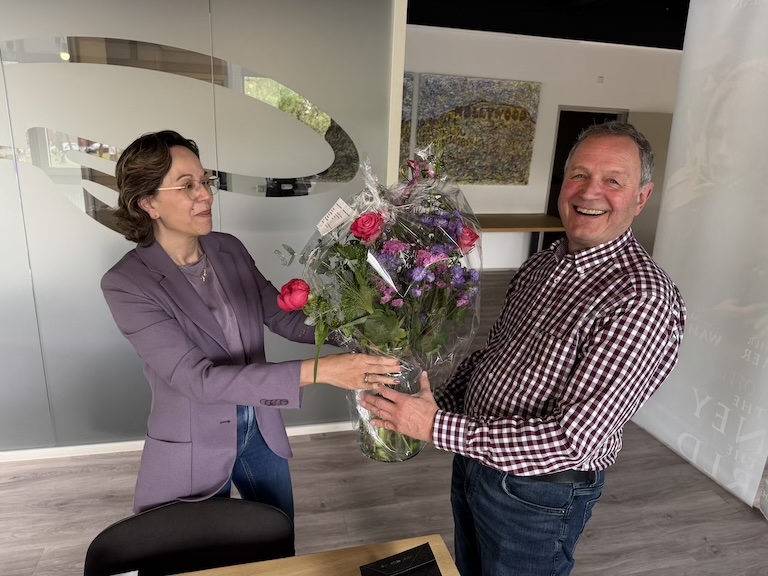
- The recent appointment of Guillaume Branders as Executive Director marks a significant strategic change for the EDCF. Branders replaced long-serving General Secretary Juergen Burghardt, who had held the position for seven years, before which John Graham did an equally brilliant job. The new role of Executive Director comes with an expanded mandate, which includes overseeing an “expanding portfolio of industry initiatives” and developing “additional educational programmes, technical workshops, and strategic partnerships”. This transition from a General Secretary to an Executive Director with a broader portfolio signals that the EDCF, having successfully guided the industry through its initial digital transition, is now formally restructuring to tackle a new set of challenges and seize new opportunities.
The EDCF’s evolution is directly linked to its adaptive leadership. The new presidency’s focus on diversity and open dialogue, coupled with the strategic appointment of an Executive Director to expand the organisation’s reach, highlighting a move to embed the values of collaboration and cross-pollination more formally into its mission. The EDCF is not just a technical body; it is also a cultural one, dedicated to ensuring that the industry’s discourse is as rich and varied as the content it presents.
Table 3: EDCF Leadership and Key Figures (2000-2025)
Name | Role | Period |
Dr. Charles Sandbank | Founding Co-Chairman | 2001-2008 |
Åse Kleveland | Chairman of the Board | 2001- 2005 |
Dave Monk | Chief Executive Officer | Appointed in 2006 |
Juergen Burghardt | General Secretary | 2018 – 2025 |
David Hancock | Former President, Chief Analyst at OMDIA | Active throughout the 2010s and 2020s |
Cathy Huis in ‘t Veld Esser | President | Introduced in 2023, active in 2025 |
Guillaume Branders | Executive Director | Appointed in 2025 |
A big thank you is also in order to the many Board Members who have served over the years and given their time, wisdom and work to enable the many things that the EDCF has done. They have done this for free and with little recognition outside the small circle of those involved, but their participation has been instrumental.
The Future of the Big Screen: The Next 25 Years
Looking ahead, the EDCF’s long-term strategy and objectives are being reshaped to address a new wave of opportunities and challenges. The organisation’s focus has broadened from the foundational task of digitisation to a more nuanced set of topics that define the modern cinema experience. This evolving mandate is consistently reflected in its recent conference agendas and new initiatives, where everything from AI to premium formats have been discussed. Recent discussions and publications point to several key areas of focus for the years to come:
- Sustainability: This has emerged as a central theme, with sessions dedicated to the “Green Deal” and the “right to repair”. Experts are exploring the environmental impact of filmmaking and exhibition, with a focus on solutions ranging from laser projection to energy-efficient HVAC systems. The EDCF is committed to helping the industry navigate this major societal and economic challenge.
- Audience Experience: The EDCF continues to champion technologies that enhance the big screen experience. This includes discussions around the standardisation of High Dynamic Range (HDR) for cinema, the impact of LED screens, and the ongoing quest to “raise the bar for our quality standards”.
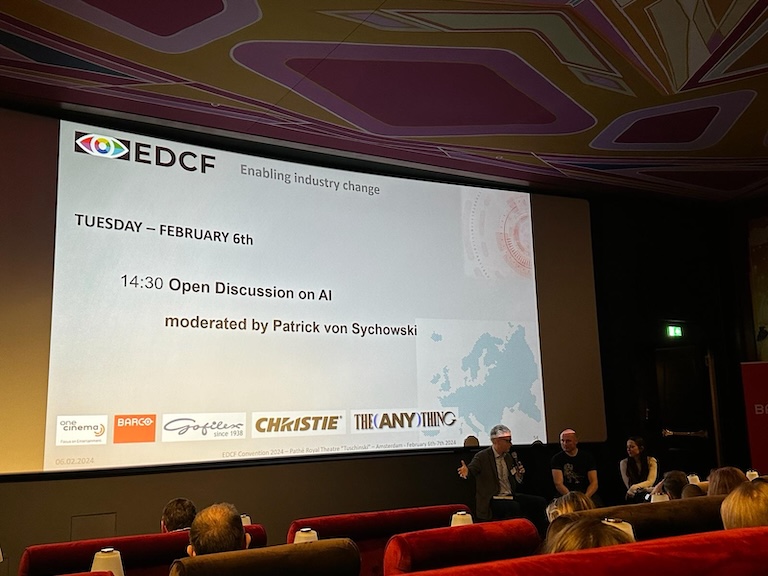
- Advanced Technologies: The EDCF is now exploring cutting-edge topics that were unthinkable a decade ago. Recent seminars have addressed the potential of AI-based subtitle generation in cloud-based workflows and the growing importance of cybersecurity and content issues. This forward-looking agenda ensures the EDCF remains at the forefront of all relevant trends and developments.
As the European Digital Cinema Forum celebrates its 25th anniversary, it stands as a model of an organisation that has successfully adapted its mission to the changing needs of its industry. The EDCF was founded at a moment of profound uncertainty and, through its commitment to collaboration and education, successfully guided a continent through a complex transition. Now, 25 years later, the organization is once again at a pivotal point, restructuring its leadership and refocusing its agenda to tackle a new set of challenges. Its enduring legacy is a testament to the power of a community that embraces innovation, proving that the magic of the big screen will continue to thrive for decades to come.